
Division of Water Resources
Department of Natural Resources
Bio:
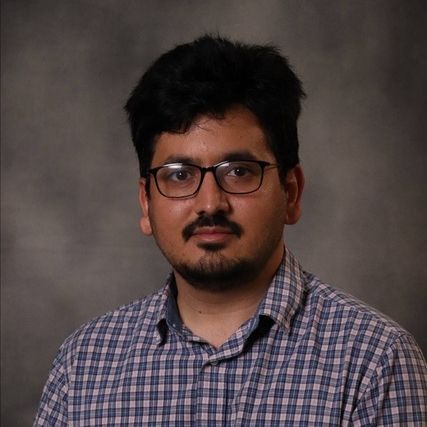
Danyal Aziz has been an Engineer with Utah Division of Water Resources since August 2023. He has a Ph.D. in Civil Engineering from the University of Alabama. Danyal specializes in hydrologic and river system operations modeling. He is also working on the integration of climate variables into statewide water demand projections. His work focuses on developing datasets and modeling tools for the Great Salt Lake basin. Danyal is responsible for overseeing the deployment of state-of-the-art instrumentation to refine evaporation models for salt flats, wetlands, and the main Great Salt Lake water body.
Title: Great Salt Lake Evaporation Monitoring Project
Abstract: Great Salt Lake is a critical ecological and economic resource for Utah. Being an endorheic lake, evaporation is the sole mechanism of water loss, yet it remains one of the largest uncertainties in basin-scale water-balance accounting. Existing evaporation estimates rely largely on indirect or spatially limited methods that cannot resolve variability across the lake’s distinct hydrological zones or capture evolving meteorological and salinity-driven dynamics.
To address the lack of directly measured evaporation data from and around Great Salt Lake, Division of Water Resources, in Summer of 2024, in partnership with the Utah Geological Survey (UGS) and Atmospheric Sciences at the University of Utah, initiated an evaporation monitoring project around Great Salt Lake called the evaporation pilot project. The pilot study was initiated to demonstrate the feasibility of using eddy-covariance towers to directly measure latent and sensible heat fluxes over the Lake’s distinct hydrologic zones. During the pilot, the University of Utah and the UGS operated eddy-covariance sites over mineral ponds, playa, and invasive phragmites in Farmington Bay. The pilot provided foundational datasets that now enable lake-wide expansion under the direction of the Division of Water Resources and UGS. The goal of the project is to produce continuous, validated evaporation data for calibration of evaporation models and public dissemination. All collected data will be accessible to the public through state-hosted and academic data portals, ensuring transparency and scientific collaboration.