
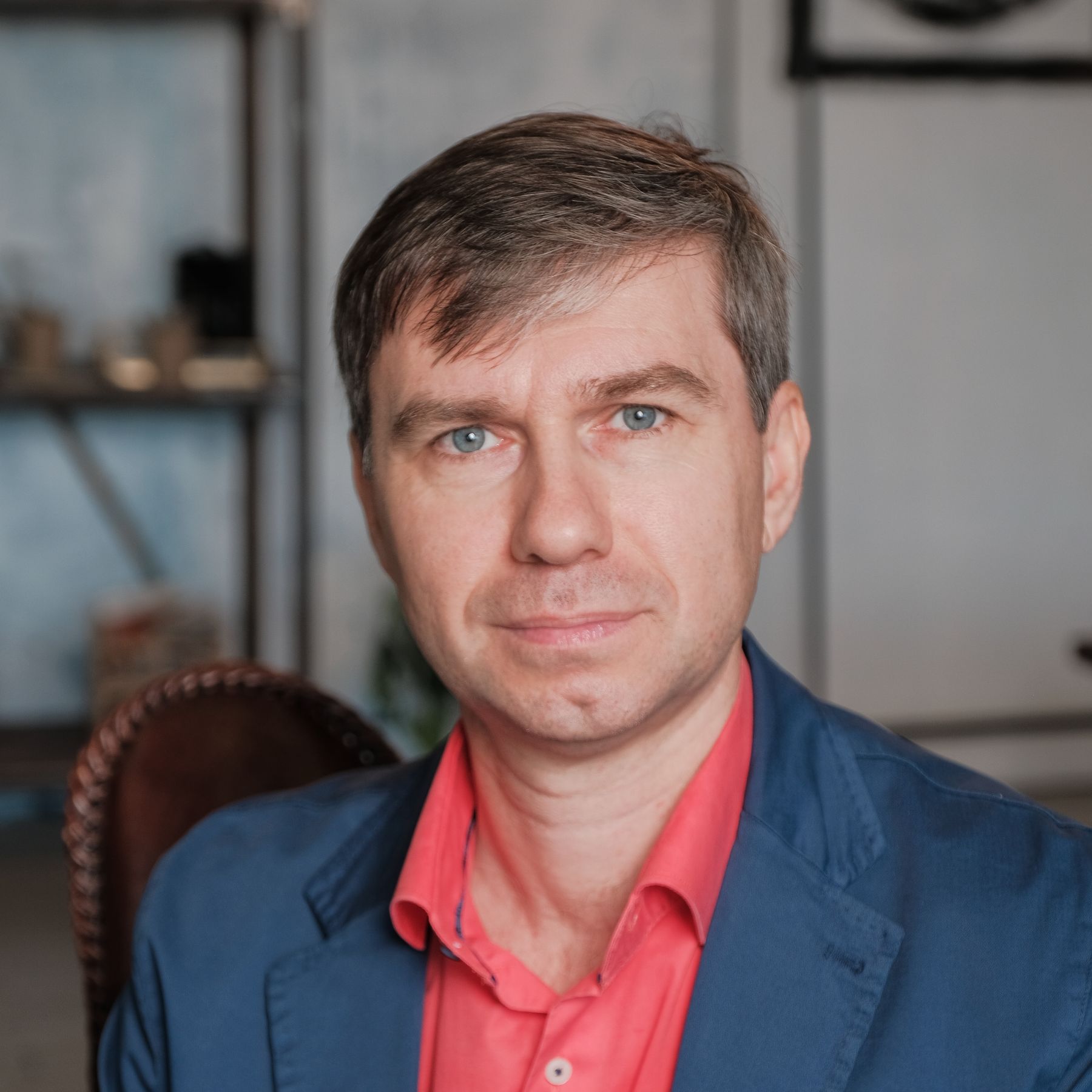
President
International Society for Salt Lake Research
Bio:
Egor Zadereev is the President of the International Society for Salt Lake Research (ISSLR) and the Head of the Science Communication group at the Krasnoyarsk Research Center of the Siberian Branch of the Russian Academy of Sciences. The mission of ISSLR is to advance the scientific understanding of saline lakes and to promote the conservation of these critical ecosystems worldwide. As President, Egor fosters international collaboration among researchers and works to elevate the policy relevance of saline lake science. Egor is also a leading researcher at the Institute of Biophysics in Krasnoyarsk, where his work focused on the ecology of saline lakes, including long-term studies on zooplankton, ecosystem dynamics, and the effects of climate change. He received his Candidate of Biological Sciences(equivalent to a PhD) from the Krasnoyarsk State University and Master of Science Degree from Central European University (Budapest). He co-authored numerous publications on topics ranging from the conservation value of saline lakes to the salinity sensitivity of aquatic life.
Title: A Global Perspective on Saline Lake Conservation: Bridging the Gap Between Science and Policy
Abstract: Saline lakes and associated wetlands are among the most threatened ecosystems globally, yet they provide critical ecosystem services and harbor unique biodiversity. While iconic water bodies such as the Aral Sea, the Dead Sea, Lake Urmia, and Great Salt Lake are shrinking at alarming rates due to water over-extraction, a lesser-known threat is emerging elsewhere: some saline lakes are expanding (e.g. in Africa). Whether shrinking or growing, the underlying issue remains the same—human activities and climate change are disrupting these ecosystems in ways that threaten their ecological integrity and the communities that depend on them. A survey of members of the International Society for Salt Lake Research (ISSLR) indicated that while direct water extraction and climate change are recognized as primary biophysical threats to saline lakes, the most significant barrier to effective conservation is a "lack of political will and governance." Paradoxically, the strategy ranked by members of the ISSLR as most promising for creating sustainable, nature-positive economies around saline lakes is "scientific research and monitoring programs." This reveals a critical disconnect between scientific understanding and its translation into actionable policy. Expert panel discussions at the IUCN World Conservation Congress (Abu Dhabi, 2025) at the specially organized session “The conservation of saline lakes and wetlands and solutions for a sustainable and resilient transition” illustrated this gap through case studies from Australia, India, China, and Nigeria, highlighting barriers including communication failures between scientists and policymakers, political unpopularity of water buybacks, and unclear land tenure. Conversely, successful restoration examples—including macrophyte recovery in Australian coastal lagoons through community engagement and the ecosystem-based revival of India's Chilika Lake—demonstrate that bridging this gap requires integrating scientific data with local knowledge, community passion, and sustained political engagement. The path forward requires a holistic, nature-positive approach that addresses both sides of the dual crisis. Key priorities include: (1) integrated water management plans that balance human needs with ecosystem health; (2) climate adaptation strategies that help ecosystems and communities respond to changing water levels; (3) improved monitoring and research to track hydrological and ecological change; (4) meaningful community involvement that incorporates local knowledge into decision-making; and (5) global cooperation across borders, as many saline lake systems transcend national boundaries. Whether a lake is shrinking or expanding, deliberate interdisciplinary collaboration that positions scientists as effective conduits between data and decision-makers is essential to ensuring the future of the world's saline lakes.