
Avian Ecologist, Forest and Rangeland Ecosystem Science Center
U.S. Geological Survey
Bio:
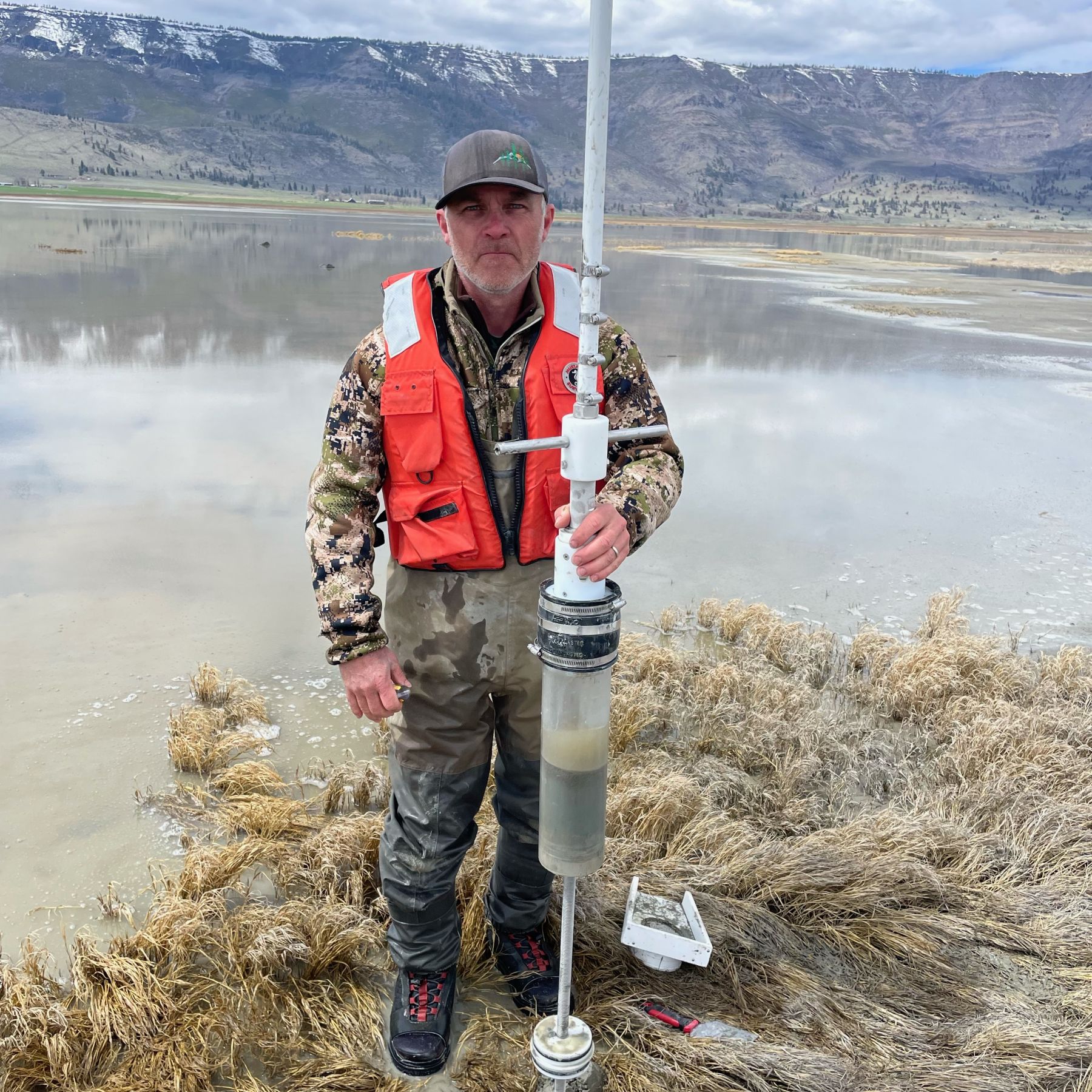
Garth Herring is an avian ecologist with the U.S. Geological Survey’s Forest and Rangeland Ecosystem Science Center in Corvallis, Oregon. His career spans more than two and a half decades and has focused primarily on waterbird research across North America. Garth’s work centers on identifying and understanding environmental threats to avian populations and providing sound science to inform conservation solutions. He is currently investigating how hydrology and water quality influence waterbird prey availability in Great Basin terminal lakes to better understand shorebird carrying capacity as part of the USGS Saline Lakes Ecosystems IWAA project. He earned an M.S. in Fisheries and Wildlife from North Carolina State University, where he studied wintering waterfowl ecology, and a Ph.D. in Integrated Biology from Florida Atlantic University, where he focused on wading bird reproductive ecology.
Title: Hydrology and Ecology of Terminal Lakes in the Great Basin
Abstract: Authors: Christine Rumsey, Jessica Driscoll, Scott Hynek, Garth Herring, Josh Ackerman, C. Alex Hartman, Ramon Naranjo, Cassandra Smith, John W. Jones, Collin Eagles-Smith, Sue Kemp, Cory Overton, Zachary O’Neal, Sara Doyle, Casey Root, Jasmine Garcia
In response to historically low water levels at terminal lakes and associated wetlands across the Great Basin, the U.S. Congress passed the Saline Lake Ecosystems in the Great Basin States Program Act of 2022, directing the U.S. Geological Survey (USGS) to monitor and assess the hydrology and bird ecology of terminal lakes in the Great Basin. Since 2023, USGS has collected data across twenty terminal lakes in the region (including Great Salt Lake) to measure water quality, water quantity, waterbird movement, invertebrate abundance, remotely-sensed surface-water extent, topography, and bathymetry. These new data will be analyzed to better understand the network of terminal lake ecosystems and how they support shorebird species across the Great Basin. This session will provide an overview of our interdisciplinary science approach, as well as share preliminary analyses of salinity, water chemistry, and hydrology across Great Basin terminal lake habitats, providing regional context for Great Salt Lake and how it fits into the broader Great Basin terminal lake network.