
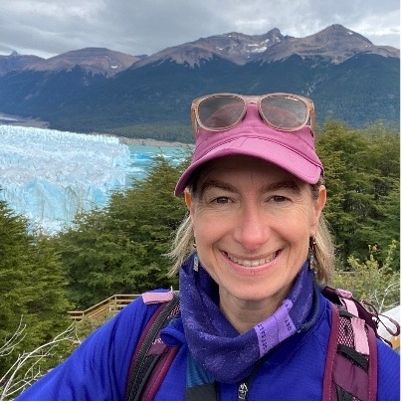
Project Manager/Watershed Scientist
Utah Water Research Laboratory, Utah State University
Bio:
Melissa Stamp is a Project Manager/Watershed Scientist with Utah State University’s Utah Water Research Laboratory and currently manages the Functional Flows Framework project. She specializes in communicating technical water resources information to stakeholders and policymakers to promote effective decision-making. Prior to joining USU, Melissa worked at the Mitigation Commission, where she managed the agency’s projects team and served as lead coordinator for the Provo River Delta Restoration Project. Previous to her eight years with the Commission, she worked as an Education Assistant at Red Butte Garden and also spent 12 years with BIO-WEST, Inc. as an environmental consultant on various water resource projects in Utah and other western states. Melissa holds an MS in Watershed Science from Utah State University and a BA in Geography from Dartmouth College. In her free time, she likes to hike with her husband and dog, play pickleball, and read murder mysteries.
Title: A Functional Flows Framework for the Great Salt Lake Basin
Authors: Melissa Stamp¹, Belize Lane¹, Farah Nusrat¹, Sarah Null¹, Paul Thompson², Noelle Patterson¹, Michelle Baker¹, Jeffrey Ostermiller³, Maddie Witte¹, Bethany Neilson¹
¹Utah State University, ²Utah Division of Wildlife Resources, ³Utah Division of Water Quality
Abstract: The Great Salt Lake (GSL) terminal basin in Utah supports a unique ecosystem including the saline lake, peripheral wetlands, and snowmelt-driven streams, all of which face high stress from competition for freshwater resources. Recent efforts to increase streamflow to GSL underscore the need to also consider instream flow requirements for contributing rivers and inflow needs for peripheral wetlands so that water dedicated to GSL can achieve maximum ecological benefits.
Functional flows are specific seasonal components of the annual hydrograph that support river functions and processes critical to aquatic ecosystem health. In the snowmelt-dominated GSL basin, these include winter low flow, spring ascension flow, peak flow, recession flow, and summer low flow. We generated metrics that quantify functional flow magnitude, timing, duration, frequency, and rate of change for 180 reference-condition streamgages within the GSL basin and Middle Rockies ecoregion. We combined these metrics with basin characteristics and climate data in a machine learning model to predict functional flow target ranges for ungaged streams in the GSL basin. Results are being made available through a map-based tool and can be used as initial targets to inform decisions on when, where, and how much water to deliver to streams, managed wetlands, and GSL.