
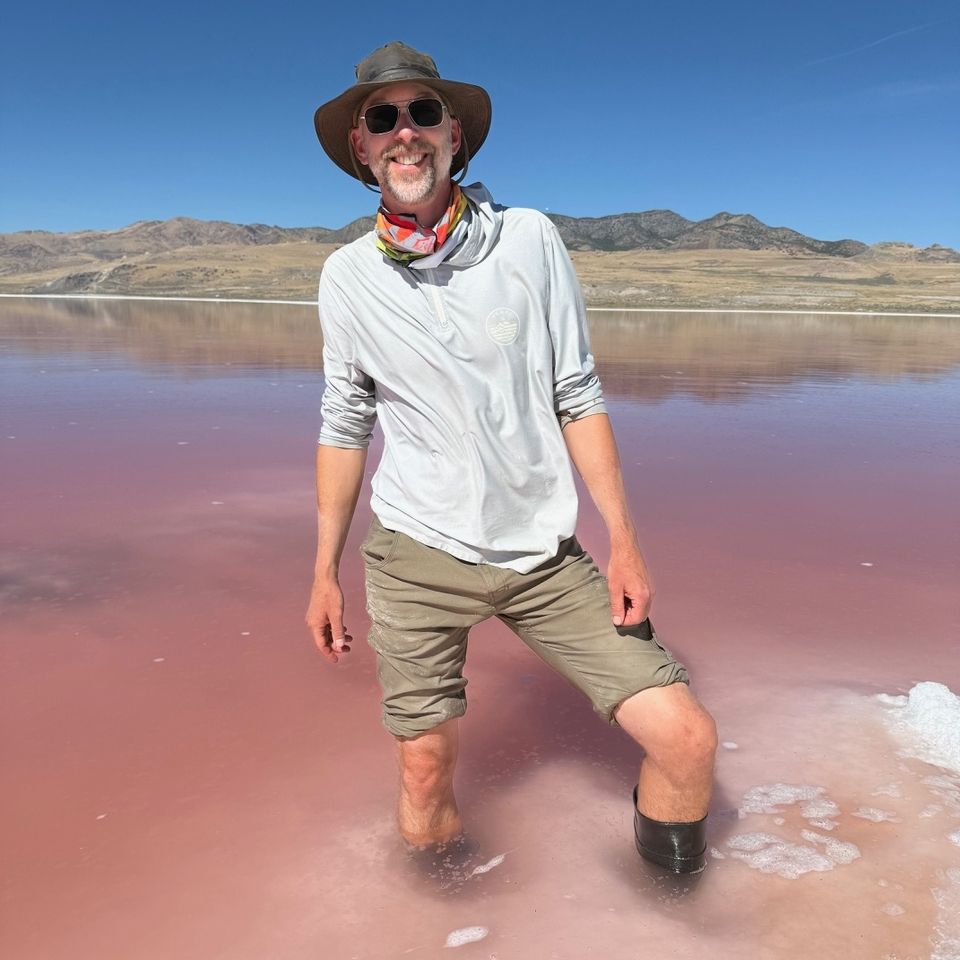
Energy and Minerals Program Manager
Utah Geological Survey
Bio:
Michael Vanden Berg grew up in southwest Michigan and received a B.S. in geology from Calvin College in Grand Rapids before heading west to play with “real” rocks in Utah. After completing his M.S. degree in geology at the University of Utah, Mike joined the Utah Geological Survey and has been there ever since, going on 23 years. Mike has been a licensed professional geologist in the State of Utah since 2008 and is currently the UGS Energy and Minerals Program Manager. Mike leads a diverse team of geoscientists that research all aspects of Utah’s natural resource development including metals, industrial minerals, oil and gas, coal, geothermal, and investigations into carbon storage.
Mike has extensive experience in obtaining and managing large, multi-year and multi-faceted, research projects for the State of Utah and has published more than 40 peer-reviewed papers and over 150 abstracts. His main area of research focuses on the lacustrine Green River Formation in the Uinta Basin, and more recently he has investigated modern Great Salt Lake, including its extensive microbialites, as an analogue for ancient lacustrine deposits.
Mike is also the author of several energy-related reports and serves as an energy expert on several state committees.
Title: Acquiring bathymetric lidar data in lake systems: Lessons learned and best practices from Great Salt Lake
Abstract: Great Salt Lake (GSL) in northern Utah is a large intermountain saline lake that hosts a unique natural ecosystem but is also important for recreation and mineral extraction. A detailed understanding of the GSL lakebed is vital for researchers studying its ecology, natural resources, and relationship to local geology and geologic hazards. Because the lake elevation has recently reached historic lows, posing threats to the ecosystem and surrounding communities, accurate modeling of lakebed exposure and changing water volumes is critical. Similar to terrestrial high-resolution topographic lidar, bathymetric lidar data can be used to quantify, monitor, and show change in subaqueous environments. The Utah Geological Survey (UGS) is investigating the application of bathymetric lidar to better model the bed of GSL and to gauge the utility of such technology in a challenging saline lake environment.