
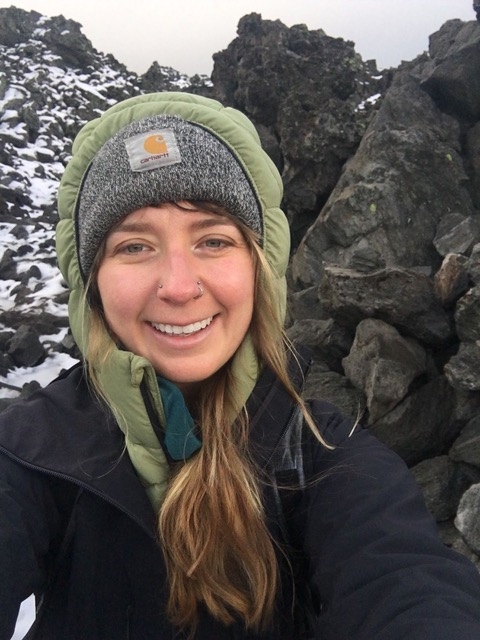
Senior Scientist
Great Basin Unified Air Pollution Control District
Bio:
Molly Blakowski is the Senior Scientist at the Great Basin Unified Air Pollution Control District (GBUAPCD) in Bishop, California where she oversees studies on the dry lakebeds of Owens Lake and Mono Lake. Prior to this role, she was a Physical Scientist with the U.S. Geological Survey Utah Water Science Center and her Ph.D. work is focused on the generation, transport, and composition of dust from Great Salt Lake. She sits on the Board of Directors of FRIENDS and the Steering Committee of the Dust Alliance for North America.
Title: Pride and Particles: Finding Balance in a Changing Lake
Abstract: For nearly 30 years, adaptive management at Owens Lake has shown that large-scale dust control is not about a single, permanent solution but about continuously monitoring and managing for balance. After the lake completely dried due to water diversions by the Los Angeles Department of Water and Power (LADWP), Owens Lake became one of the largest sources of PM10 dust emissions in the United States. In response, the LADWP has implemented a suite of dust control measures, including shallow flooding, managed vegetation, and gravel cover, in coordination with and subject to oversight by the Great Basin Unified Air Pollution Control District (GBUAPCD). The GBUAPCD monitors sand flux across the lakebed and PM10 concentrations along the shoreline to evaluate the effectiveness of these controls under shifting climatic conditions and management strategies. Experience shows that no single approach is always best across this dynamic landscape; effective stewardship depends on flexibility, responsive management, and collaboration to meet multiple objectives simultaneously. As terminal lakes worldwide face declining levels and rising dust risk, Owens Lake offers practical lessons in implementing controls, measuring performance, and balancing air quality, habitat, cultural, and water conservation goals.