
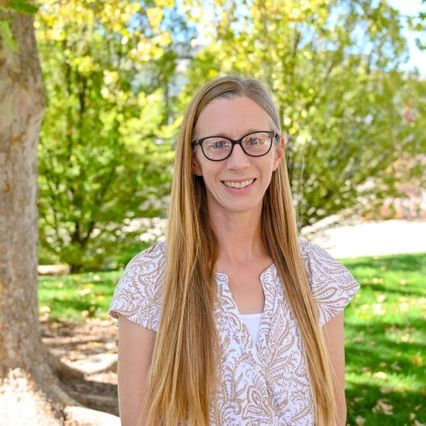
Professor, Department of Sociology & Criminology
University of Utah
Bio:
Dr. Sara Grineski is a Professor of Sociology in the Department of Sociology & Criminology at the University of Utah. She has a shared appointment in the School of Environment, Society, and Sustainability. At the University of Utah, she serves as the Director of Undergraduate Studies in her home department, the co-Director of the Center for Natural and Technological Hazards, and as a leadership team member at the Wilkes Center for Climate Science and Policy. Her research interests are in environmental health disparities, children’s health, and environmental justice. Related to the Great Salt Lake, Grineski has conducted research on social disparities in dust exposure and on people’s perceptions of the varied impacts associated with the drying lake.
Panel: Preservation and Protection in Perpetuity: People’s Perceptions and Participation
Abstract: Social scientists are well suited to investigate and analyze people’s perceptions and participation regarding Great Salt Lake and how Utah is doing with preserving and protecting it in perpetuity. This panel will present audience members with key insights from research being conducted by members of the recently formed Great Salt Lake Social Science Network (GSL SSN), who are investigating a variety of societal issues related to Great Salt Lake, many focusing on the drying of the lake. The network includes social science researchers from many of Utah’s universities, as well as other states. They have been conducting GSL-related research focused on the larger Utah population, as well as specific groups, and different types of communities, employing a variety of research methods including surveys, focus groups, individual interviews, policy analyses, content analyses of public documents, photovoice, and longitudinal studies.
Each panelist will provide what they consider the most important insight from their work. Issues that members of the network are researching broadly include:
- how various segments of the Utah population perceive and experience environmental risk related to Great Salt Lake’s desiccation, and their responses, including migration and displacement, effects on investment strategies, and other forms of adaptation;
- analysis of public discourse, politics, and management issues related to efforts to save and preserve the GSL; and,
- Utahns’ support for a wide range of policies and strategies related to GSL, including those addressing the drivers and consequences of lake desiccation and those focused on protecting people as well as other species and nature more generally.